

Miami's OnSport AI Raises $2 Million to Spot Athlete Injuries Before They Happen
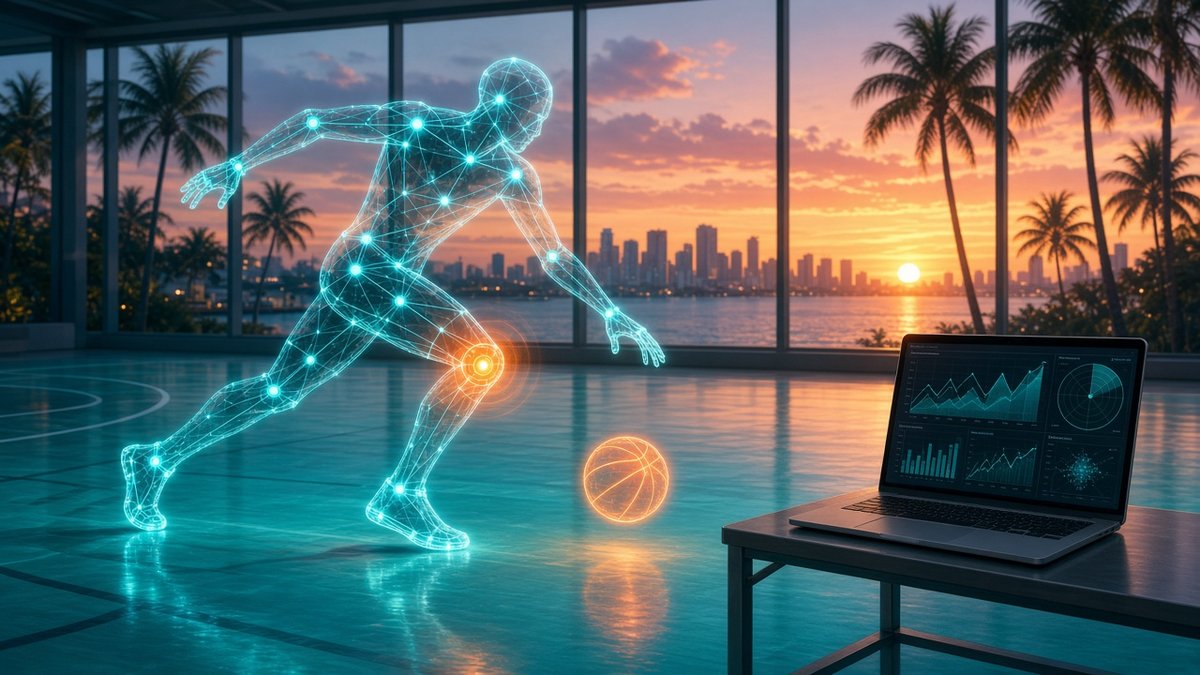
Founded by a former London Lions general manager and a defense-tech entrepreneur, OnSport AI uses computer vision to compare how athletes move against their own history. The new money funds hires, spo
MIAMI — A Miami sports-tech startup is betting that the best way to fight injuries is to notice when an athlete starts moving a little differently than usual.
OnSport AI, a computer vision and machine learning company, announced on Nov. 5 that it had closed a $2 million pre-seed round, according to the company’s press release. Refresh Miami reported that the round was led by undisclosed overseas basketball teams. The company is based in Miami and also has an office in Orange County, California.
A coach’s problem turned into a product
The idea started on the bench. Co-founder and CEO Brett Burman was general manager of the London Lions, a team that, according to the release, reached the EuroCup Final Four under his watch and became the most successful team in United Kingdom history. He had players with NBA experience on his roster, and some began suffering non-contact injuries.
His staff could point to fatigue and training load, but that did not tell him what to do next. “There was never an answer as to what was going on with these guys and how do we actually do anything to stop it and to make these guys healthier,” Burman told Sports Business Journal, as quoted by Refresh Miami. “Really, I needed an alarm.”
That search became OnSport AI. Burman built it with Ahmad Ishaq, a serial entrepreneur with two decades of experience in military work who co-founded StatusPRO, an NFL-licensed virtual reality product. Founding member Adam Petway, the former lead biomechanist for the Washington Wizards and Philadelphia 76ers, leads the company’s biomechanics work.
How the technology works
OnSport’s patent-pending software analyzes athlete movement to flag elevated injury risk, both during live play and in later review, the company said. Rather than judging every player against one broad standard, it compares a player’s movement over time and looks for changes from that athlete’s usual patterns. It can use a league’s player tracking data or, when that is not available, video, according to Refresh Miami.
Burman and Petway spent more than a year reviewing film and research and feeding their findings into the company’s AI systems, focusing on movement patterns that can come before serious injuries and on what happens at the moment of injury.
“Real-time feedback is important, but you have to look at the totality and the chronicity of the signature as a whole,” Petway said, per Refresh Miami. In plain terms, a single clip may tell only part of the story; changes that build over days or weeks can matter too.
Burman said the goal is a clear answer, not more numbers. “People like to give raw numbers and they like to give data, but when you’re sitting in a position where you need an answer, raw data actually becomes significantly irrelevant,” he said.
Refresh Miami noted one important caveat: whether OnSport’s warnings actually lead to fewer injuries is a separate question, and the company has not published results that answer it.
Customers and where the money goes
The company says it has agreements with organizations across the NBA, NCAA, international basketball and professional soccer, and that it is finalizing league-wide enterprise agreements to provide data for digital media and fan engagement. OnSport has also been running a pilot with an NBA team for more than a year, according to Refresh Miami, though it did not name its partners or share financial terms.
The $2 million will go toward product development, growing the engineering and biomechanics teams, scaling partnerships across pro and college sports, and advancing the company’s military work.
That last piece is a notable part of the pitch. OnSport is applying the same movement analysis to the health and readiness of service members. “The same insights that help protect a professional athlete can help protect any worker, whether in the military or the labor sector,” Ishaq said in the release.
Burman framed the value in business terms as much as sports terms. “Nothing derails a season like injuries, and it’s terrifying to make decisions without the right data,” he said in the release. “If I’d had OnSport AI, I have no doubt my team would have been better positioned to succeed, on the court and financially.”
Why it matters for Miami founders
OnSport is a useful case study for South Florida entrepreneurs in a few ways:
- Founder-market fit sells. The company’s story starts with a real operator’s pain point. Burman ran a team, felt the problem and went looking for a fix.
- Money from inside the industry is a signal. Basketball teams leading a round for a basketball injury product suggests people who live with the problem see a need for the fix.
- One core technology, several markets. By pointing the same movement analysis at sports, media data and the military, OnSport is spreading its bets beyond a single league’s budget cycle.
For Miami’s growing sports-tech scene, the next test is proof. If OnSport can show measurable drops in injuries across its pilots, a $2 million pre-seed could be the first step toward a much bigger round.