

Doroni Aerospace Has Raised $60 Million From 20,000-Plus Small Investors to Build a Flying Car in Dania Beach
Doroni Aerospace, the Dania Beach company building the two-seat H1-X personal electric vertical takeoff and landing aircraft, says it has raised more than $60 million from more than 20,000 investors i
DANIA BEACH — Most South Florida startups raise money from a few venture firms. Doroni Aerospace raised it from a crowd.
The Dania Beach company, which is building a personal electric aircraft it calls the H1-X, announced on Nov. 17 that it has raised more than $60 million from more than 20,000 investors across its community-backed rounds, according to the company’s press release published by Vertical Mag. The South Florida Business Journal described the backers as small investors in community-backed rounds, in a story shared by the Greater Fort Lauderdale Alliance.
Doroni said it plans to put the capital toward hiring engineers, expanding key partnerships and beginning preparations for advanced test flights of the H1-X in 2027.
What Doroni is building
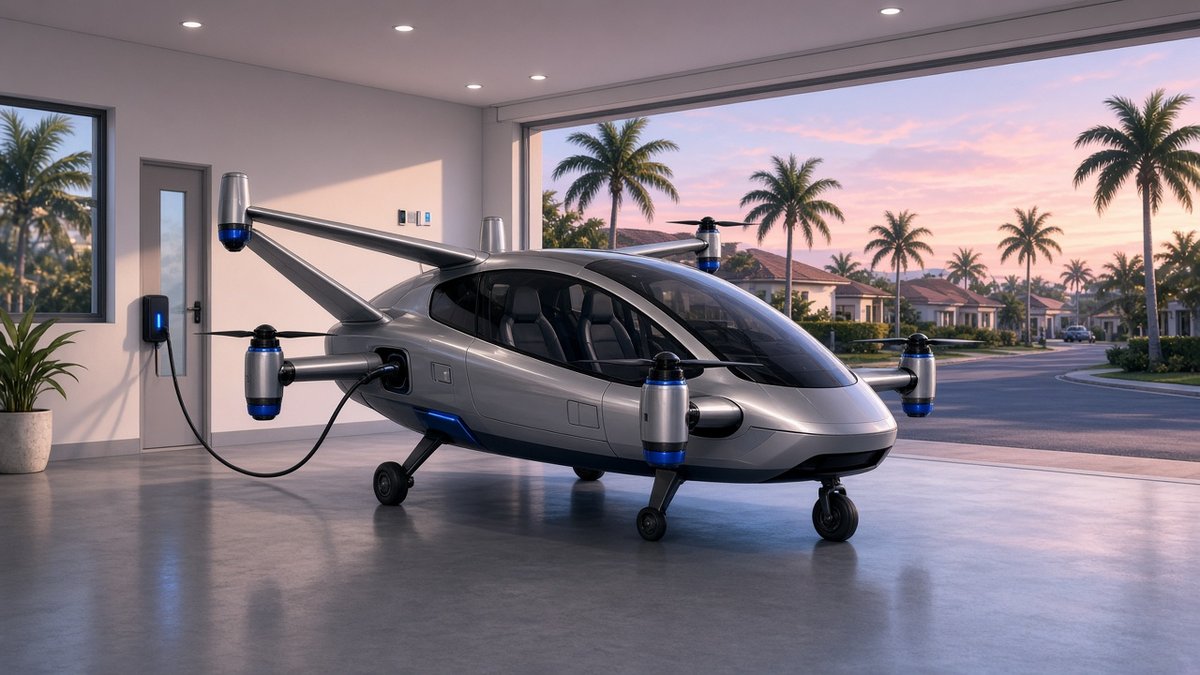
The H1-X is designed as a two-seat personal flying vehicle with tandem wings and distributed electric propulsion, according to the company. Doroni’s design targets read like a pitch aimed at commuters rather than airlines. The company says it plans for the aircraft to:
- take off and land vertically from private property where local rules permit, existing helipads and vertiports;
- fit in a standard two-car garage and taxi out on electric wheel motors;
- charge at the same fast chargers electric cars use, reaching 80% in about 25 minutes;
- carry ten independent motors and a whole-airframe ballistic parachute, which Doroni says are engineered to maintain controlled flight even if a single motor fails;
- include SOUL AI, a digital co-pilot the company says is designed to assist pilots and reduce workload.
Trade publication eVTOL Insights noted that these “remain development targets rather than demonstrated operational capabilities.” That is an important distinction for anyone reading the spec sheet.
The track record so far
Doroni says its earlier prototypes have completed more than 70 test flights, including one of the first manned test flights of its kind in the United States. The company also holds a Federal Aviation Administration Special Airworthiness Certificate for prototype testing.
This year, according to the release, Doroni signed an agreement with SES AI to supply batteries for its flying prototype and partnered with TLG Aerospace on structural, aerodynamic and certification engineering for the H1-X. The company reports more than 600 pre-orders.
The plan, in stages
Chief Operating Officer Rami Arbili laid out a step-by-step roadmap in the announcement.
“We are pursuing this vision in clear, deliberate stages,” Arbili said. “First, we will complete the H1-X engineering program, then build and take our prototype into an advanced test campaign beginning in 2027. From there, we will advance through light-sport aircraft certification under the FAA’s new MOSAIC rule before scaling manufacturing and building out a nationwide service network.”
MOSAIC, short for Modernization of Special Airworthiness Certification, is the FAA rule that eVTOL Insights said Doroni is working toward for certification. Light-sport certification would put the H1-X in a category of small aircraft that are simple to operate, the Business Journal noted. It would not, on its own, make Doroni an air taxi company.
The founder’s pitch
Founder and CEO Doron Merdinger tied the milestone to growing public interest in flying cars, pointing in the release to Tesla’s unveiling in October of a next-generation Roadster that the company described as able to fly using thruster technology.
“When the most famous carmaker on earth starts talking about flying cars, the whole world starts imagining what’s possible,” Merdinger said. “That’s great for everyone who shares this vision. Our investors saw it early, and they’re the reason we’re building it today.”
He added: “Ten years from now, I believe flying your own aircraft to work, to the beach, or to see family will feel as normal as driving does today. Every engineer we hire and every test we run is a step toward that world.”
Why crowdfunding matters here
Raising $60 million from more than 20,000 people is unusual for a hardware company in a field where development costs are steep and certification timelines are long. It gives Doroni a large base of supporters who are also, in many cases, enthusiasts and potential customers. It also means thousands of everyday investors are exposed to a company whose main product is still in development.
The Business Journal put the timeline in context: the FAA has not certified any eVTOL aircraft for commercial operations in the U.S., and the agency expects certified air taxi services to be operational by 2028. Doroni’s own plan has the H1-X entering an advanced test campaign in 2027, with certification and manufacturing to follow.
For Broward County, the company’s growth is a bet that South Florida can be home to aircraft builders, not just the region’s better-known marinas, ports and airports. The immediate local impact will come from hiring. Doroni said the new money will fund engineers, and the next milestones to watch are the build of the prototype and the start of that 2027 test campaign.